Splitter
Sometimes, your circuit can have too many wires running in parallel. In such cases, you may want to group them into a single bundle. To do this, you can use a splitter, which lets you either combine multiple wires into a bundle or split a bundle into separate wires.
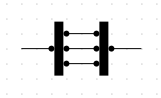
Before you drag and drop a splitter into your circuit, you'll need to choose:
- the number of pins on the split end,
- the bit width of each pin on the split end, and
- the splitter’s rotation.
For example, if you choose 4 pins and set the bit width to 2, each pin on the split side will carry 2 bits. This allows you to bundle other bundles.
The combined end will then carry 8 bits total (2 bits × 4 pins).
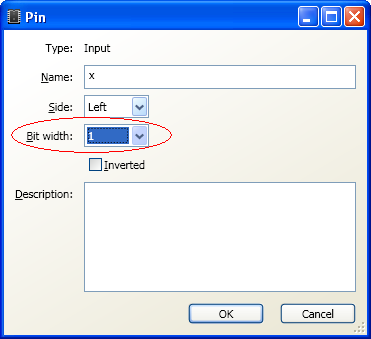
Elements like input/output pins, constants, RAM, and ROM support such bundled connections—but you must specify the bit width you need.
To do this, double-click the element while in edit mode. A property dialog will appear with a dropdown menu where you can set the bit width.
The probe also supports bundles, but it detects the bit width automatically—so you don’t need to set it manually.
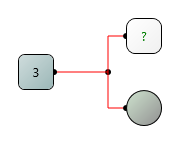
Starting from version 2.19.12.09, wires that connect pins with different bit widths will turn red. This helps you spot and fix mismatches more easily.